Bio + FAQ
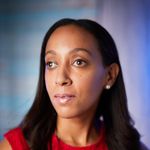
Haben Girma is an award-winning advocate, author, and keynote speaker, and the first Deafblind graduate of Harvard Law School. President Obama named her a Champion of Change, France appointed her a Knight of the Order of Arts and Letters, and the World Health Organization chose her as an inaugural Commissioner on its Commission on Social Connection. She partners with organizations around the world to spark innovation, build resilience, and deepen human connection.
The New York Times praised her best-selling book, Haben: The Deafblind Woman Who Conquered Harvard Law. She demonstrates how constraints fuel innovation, crafting non-visual techniques for everything from dancing salsa to climbing an iceberg in Alaska. Her ingenuity led her to develop a speech-to-Braille communication system, opening a powerful new channel for Deafblind communication. The story takes readers on adventures around the world, including building a school in Mali, fighting for blind readers at a courthouse in Vermont, and meeting with President Obama and President Biden. Warm, funny, thoughtful, and uplifting, this captivating book is a testament to Haben’s determination to resist isolation and find the keys to connection.
Organizations such as Apple, Bottega Veneta, Disney, Gartner, Google, Microsoft, Oxford University, and Visa have invited her to deliver keynote presentations. TIME included her in TIME100 Talks.
Haben was born and raised in California, where she currently lives.
Jump to heading#Frequently Asked Questions
Jump to heading#Why did you become a disability rights lawyer, and why did you leave litigation?
As a Deafblind student in college, I read about attorneys using the Americans with Disabilities Act (ADA) to remove barriers. Their work gave me the courage to try dismantling a stubborn barrier at my college cafeteria, and that adventure later became a story in my TEDx talk: Why I work to remove access barriers for students with disabilities.
After law school, I represented the National Federation of the Blind in a lawsuit seeking to get the digital library Scribd to make its services accessible. Scribd argued that it didn’t have to, claiming the ADA doesn’t apply to websites and apps. The Court disagreed and ruled in our favor. “Now that the internet plays such a critical role in the personal and professional lives of Americans, excluding disabled persons from access to covered entities that use it as their principal means of reaching the public would defeat the purpose of this important civil rights legislation,” the Court wrote. Scribd soon agreed to make its digital library accessible. You can read the full decision here: NFB v. Scribd.
In 2016 I left litigation to launch my own business. I now educate organizations about accessibility through writing, speaking, consulting, and producing videos that reach millions of people, because teaching people to build access reaches further than fixing one website at a time.
Jump to heading#Why should organizations invest in accessibility?
Accessibility expands who you can reach. Over 1.3 billion people worldwide have disabilities, according to the World Health Organization, and the disability market, which includes our friends and families, controls more than $18 trillion in annual disposable income. Accenture’s report The Disability Inclusion Imperative found that companies that lead on disability inclusion earn 1.6 times more revenue and 2.6 times more net income than other companies surveyed. Designing with disabled people also drives innovation. Audiobooks started as a tool for blind readers and are now extremely popular among sighted people. Access is also a legal obligation, and investing in accessibility costs far less than dealing with litigation.
Jump to heading#What can organizations do to become more accessible?
Increase hiring of disabled people, including in leadership. Plan for accessibility from the start rather than retrofitting it later, which always costs more. Learn more strategies on my Accessibility Guide.
Jump to heading#How did you overcome your disability?
My disability is not something I’ve had to overcome. I’m still Deafblind. The biggest barrier I face is ableism, the widespread beliefs and practices that value nondisabled people over disabled people. My success at school, in the office, and even on the dance floor were facilitated by communities that chose to do the work of dismantling ableism.
Jump to heading#You’re just like Helen Keller! What do you think of her?
People pressured me to adopt her as a role model and I resisted. When I reached college, I finally took the time to learn about Helen on my own terms. Reading about her work, I felt so much admiration and respect.
The danger of a single disability story is that the public expects people to conform to that story. My story is one more story from which the public can learn, and I hope having more disability stories will get people to stop saying, “You should be just like ‘X.’” We all deserve the opportunity to develop our own unique talents and interests. It’s not fair to tell someone, “You should learn to surf because Haben surfs.” Such statements pressure people to conform to a single story, a single set of expectations. That’s incredibly limiting.
Forcing role models on people doesn’t work. Instead, take the time to listen to the dreams of your friends and help them find ways to transform them into reality.
Jump to heading#What advice do you have for journalists writing about disabled people?
Challenge yourself to create a disability story without using the word inspiration. The overuse of the word, especially for the most trivial things, has dulled its meaning. People sometimes even use the word as a disguise for pity. For example, “You inspire me to stop complaining about my problems because I should feel grateful I don’t have yours.” Messages that perpetuate us versus them hierarchies contribute to marginalization. Engage audiences by moving beyond the inspiration cliché.
Jump to heading#Harmful Messages We Should Avoid
- Non-disabled people should feel grateful they don’t have disabilities. This perpetuates hierarchies of us versus them, continuing the marginalization of disabled people.
- Successful disabled people overcame their disabilities. When the media portrays the problem as the disability, society is not encouraged to change. The biggest barriers exist not in the person, but in the physical, social, and digital environment. Disabled people and their communities succeed when the community decides to dismantle digital, attitudinal, and physical barriers.
- Flat, one-dimensional portrayals. Stories that reduce a person to just a medical condition encourages potential employers, teachers, and other community members to do the same. We are all multidimensional and participate in multiple communities.
Jump to heading#Great Messages We Should Send
- We respect and admire disabled leaders, just as we respect and admire our non-disabled leaders.
- We can always find alternative techniques to reach goals and accomplish tasks. These creative solutions are equal in value to mainstream solutions.
- We’re all interdependent and go further when we support each other.
Read A Brief Disability Accessibility Guide
Jump to heading#How do you communicate with people?
How I communicate with someone depends on the skills we share. Written English is my strongest form of communication, so if the person I am communicating with knows written English and can type, that’s what we’ll do. The person types on a wireless keyboard that outputs to a braille display. I read as the person types. If the person understands spoken English, then I’ll voice my end of the conversation. Depending on the person’s abilities, I may use sign language, type text, voice in another language, or work with an interpreter.
Adapting to the abilities of others and the restraints of the environment are essential to communication. My guide dog, unable to use spoken English, will nose-nudge my hand to request my attention. Salsa dancers, unable to type while dancing, convey music and motion through their hands. Learning the language of salsa and other partner dances has placed me within a community that communicates joy through movement and music. Whether through movement, written words, spoken words, or other cultural symbols people connect when they search for shared symbols and adapt to each other’s abilities.
Jump to heading#How did you learn to speak as someone who is Deafblind?
Deafblindness encompasses a wide variety of different types of hearing loss. I have some hearing in the high frequencies, which helped me develop speech. Thousands of hours of practice, from theatre classes to voice coaching by Penny Kreitzer, sharpened my skills as a keynote speaker.
Jump to heading#How do you pronounce your name?
Haben: (“Ha” like “ha-ha,” and “ben” like “Benjamin”)
Girma: (“Gir” like “girl,” and “ma” like “karma”).
Jump to heading#I am so confused. Ethiopians say you are Ethiopian. Eritreans say you are Eritrean. What is your ethnicity?
It’s complicated, I know. I was born and raised in California. My father grew up in Ethiopia, and my mother grew up in Eritrea. I identify as an American with Eritrean and Ethiopian heritage.
Jump to heading#Can you watch movies?
I access movies by reading the screenplays, which have written dialog and visual descriptions. Since movies hold a central place in our culture, I try to read the screenplays of all the major ones.
Jump to heading#What do you fear?
I fear fear’s power. Fear fuels all the injustice in our world. Fear stands behind all the pain experienced by those marked as “others” by a majority group. Fear freezes compassion that would otherwise build bridges between all our unique lives. Pushing aside fear, I celebrate the growing number of people who recognize our shared humanity.
Have more questions? Send them to contact@habengirma.com